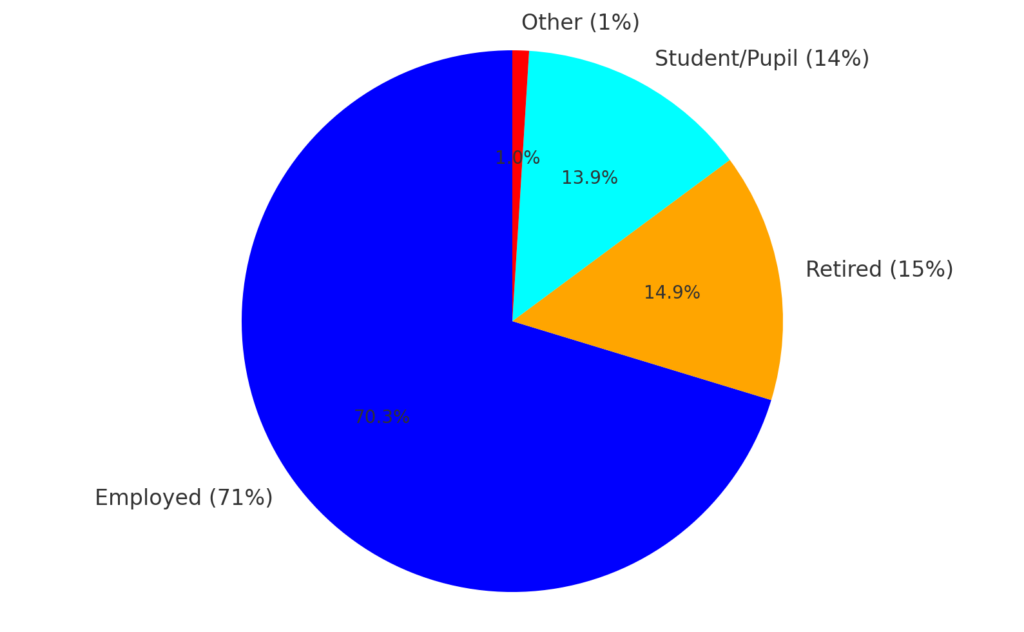

Results of a survey among visitors to Bohinj in 2023
Timeframe of the survey execution: August – December 2023
The survey was published on the website www.bohinj.si. Additionally, it was available in printed form at accommodation providers and tourist information centers. Part of the survey was also conducted in the field, where random visitors to cultural and natural attractions were invited to participate, ensuring diversity and representativeness of the sample.
Survey language accessibility:
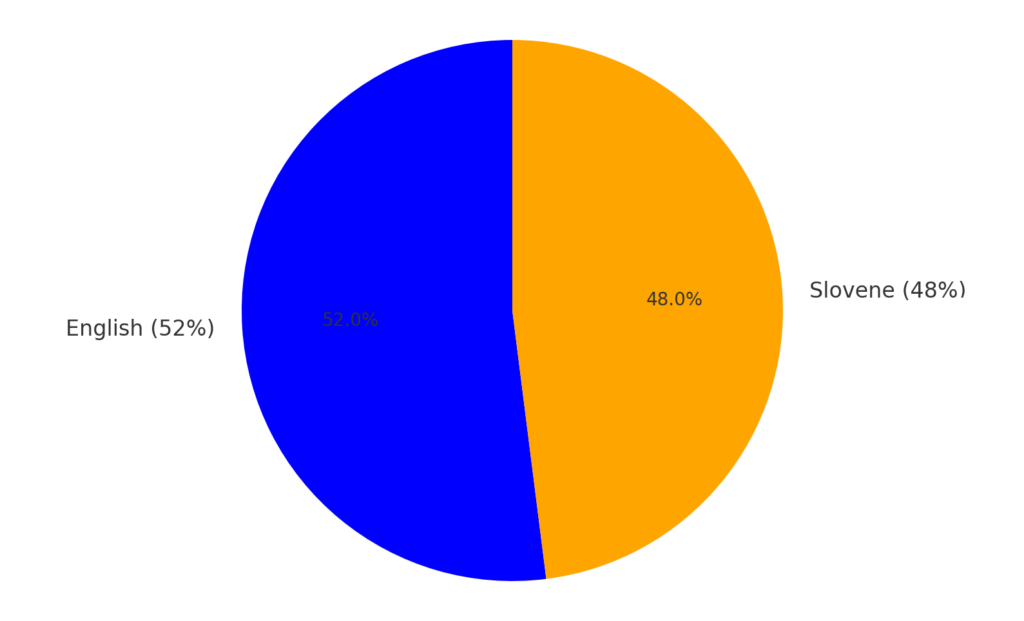
The survey was available in both Slovenian and English, ensuring broader accessibility for both domestic and international visitors. A total of 48% of respondents (or individuals conducting the survey) completed the survey in Slovenian, while 52% completed it in English. In total, 176 respondents participated in the survey.
Nationality of visitors:
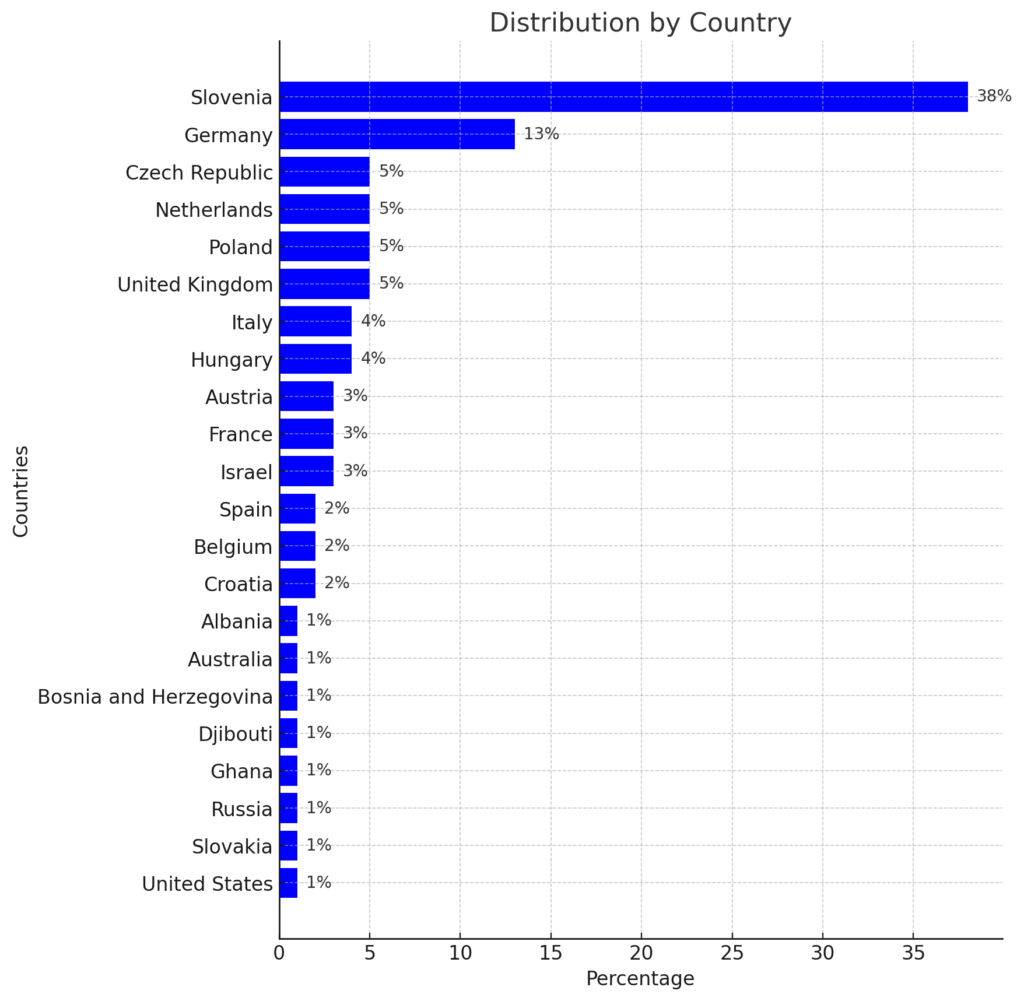
The majority of visitors to Bohinj come from Slovenia, accounting for 38% of all respondents. Among foreign visitors, Germans are the most prevalent, representing 13%. They are followed by a group of countries with an equal share, namely the Czech Republic, the Netherlands, Poland, and the United Kingdom of Great Britain and Northern Ireland, each contributing 5%. Italians and Hungarians each account for 4%, while Austrians, French, and Israelis each make up 3%. Spaniards, Belgians, and Croatians each represent 2% of the respondents, while visitors from Albania, Australia, Bosnia and Herzegovina, Djibouti, Ghana, the Russian Federation, Slovakia, and the United States of America each account for 1%. Overall, visitors from 21 different foreign countries participated in the survey, providing insight into the broad international scope of visits to Bohinj.
Who do visitors come to Bohinj with?
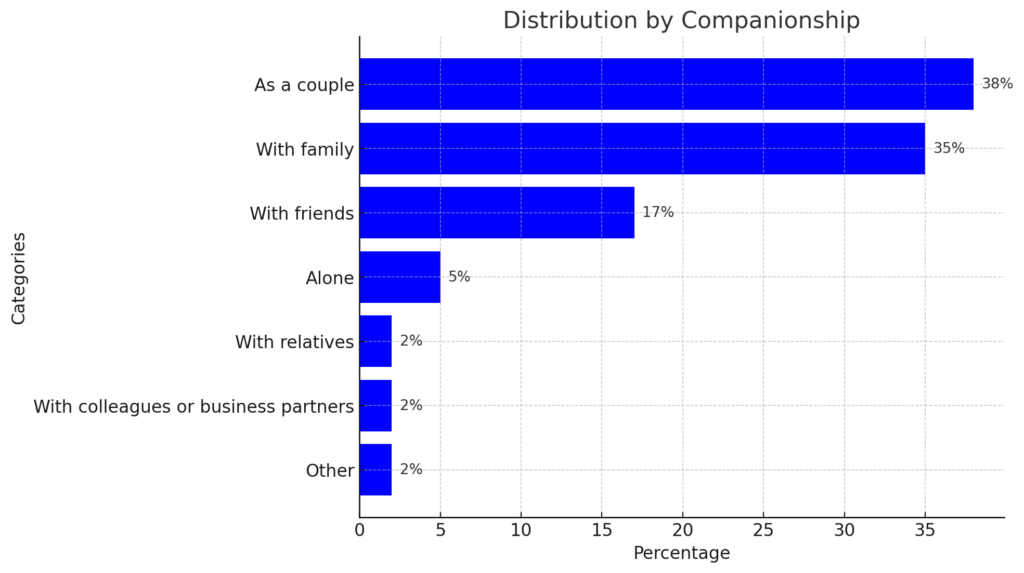
Most visitors to Bohinj travel to the destination as a couple, accounting for 38% of all respondents. This is followed by family visits, characteristic of 35% of visitors, highlighting the destination’s popularity for family outings. Groups of friends represent 17% of visitors. Solo travelers make up 5% of respondents. Visitors who come with relatives, business partners, or colleagues are less commonly represented, as each of these groups accounts for only 2%. The results indicate that Bohinj attracts a wide range of visitors, with couples and families being the predominant groups.
Lenght of stay:
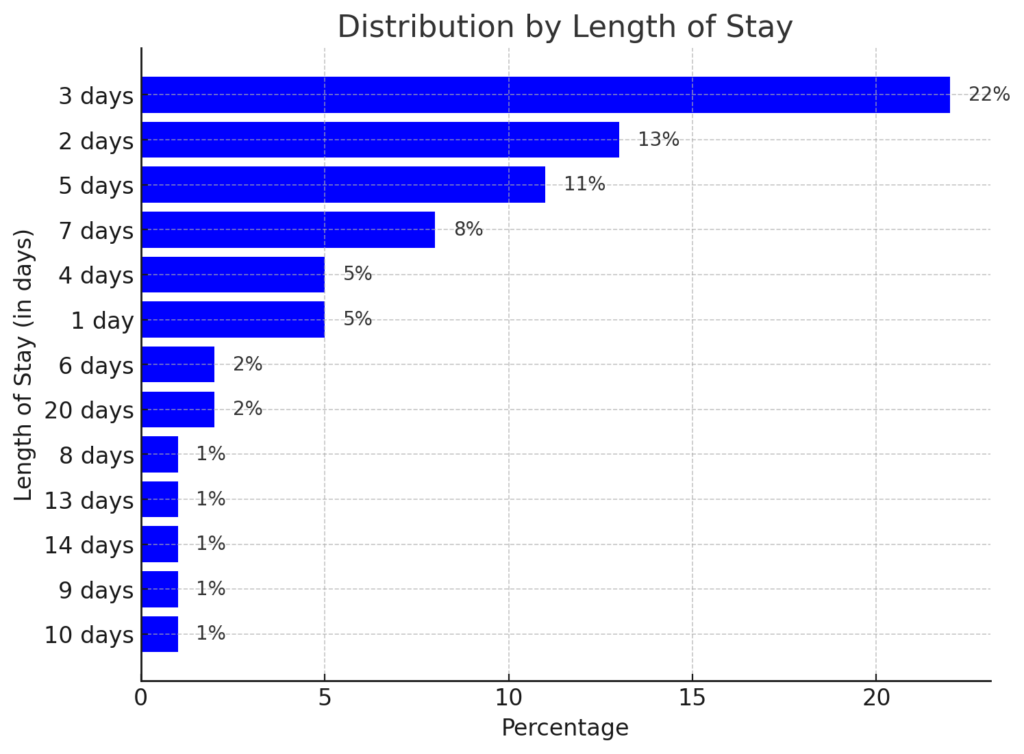
The most common length of stay for visitors in Bohinj is 3 days, accounting for 22% of respondents. This is followed by stays of 2 days (13%) and 5 days (11%). For 8% of visitors, a stay of 7 days is typical. Visitors staying 4 days or just 1 day each represent 5% of respondents. Day visitors who do not spend the night in Bohinj, as well as those staying 6 days or more (e.g., 20 days), are represented in smaller proportions, at 2%. Stays lasting 8, 9, 10, 13, or 14 days are rare, reported by only 1% of respondents. The survey results reflect the actual average length of stay in the destination, which is 2.7 days.
Mode of transport at the destination:
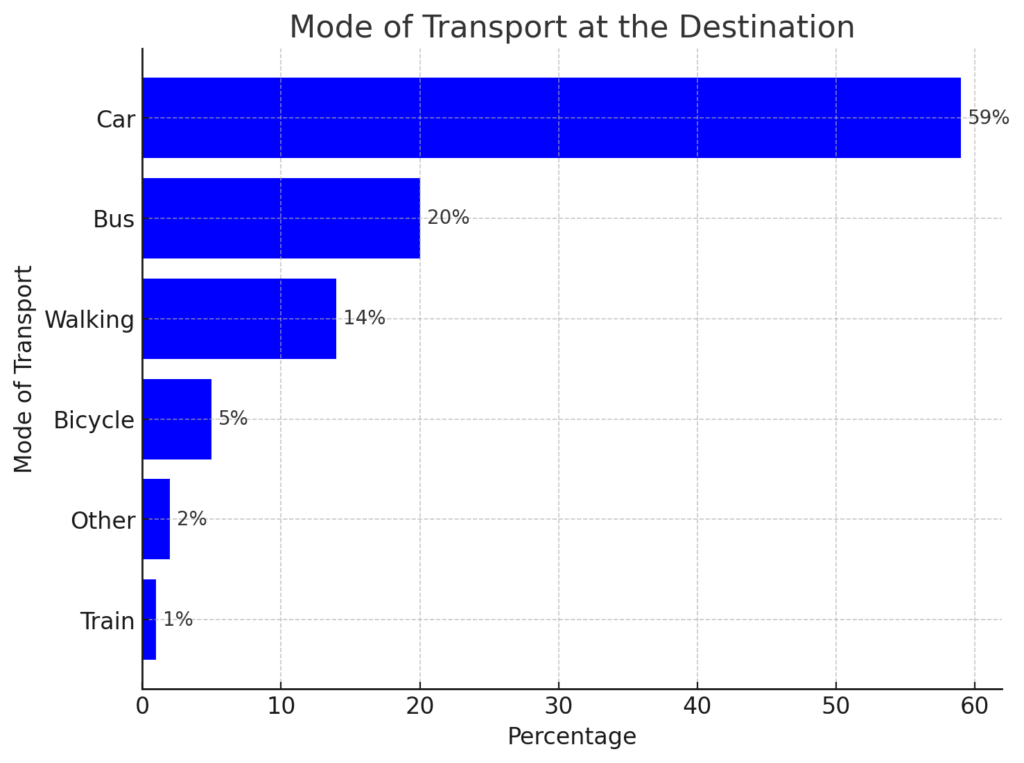
In Bohinj, the majority of visitors use a personal car for transportation, accounting for 59% of all respondents. Public transportation, such as buses, is used by 20% of visitors, a significant share that highlights the potential for further promoting sustainable transportation options. Additionally, 14% of visitors choose not to use any means of transportation within the destination, opting to move around on foot, further emphasizing sustainable possibilities. Bicycles are used by 5% of visitors, while trains and other modes of transportation remain rarely used, with only 1% and 2% of respondents, respectively. The results indicate a dominance of personal cars but also an opportunity to improve and promote public transportation.
The main purpose of visiting the destination:
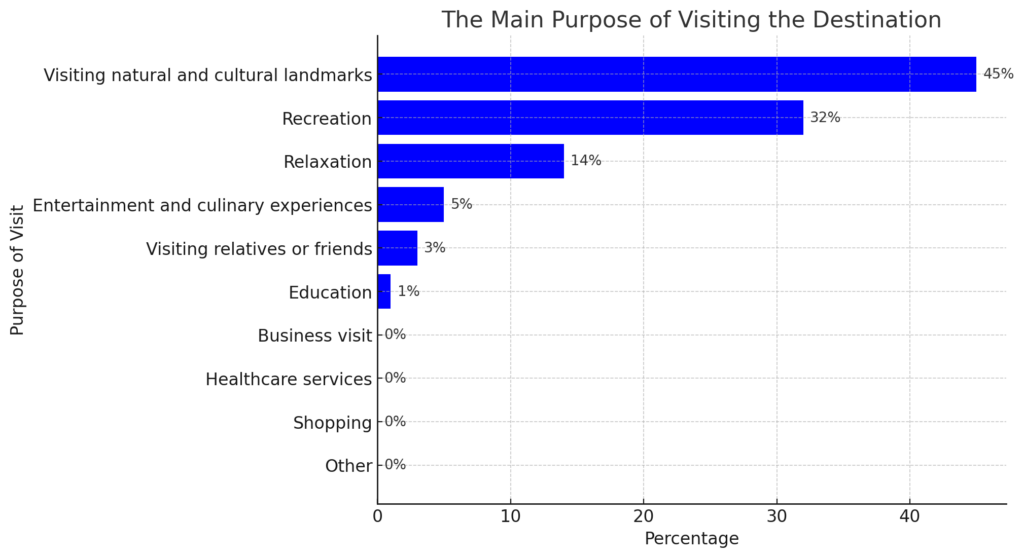
The most common reason for visiting Bohinj is exploring natural and cultural attractions, highlighted by 45% of respondents. Recreation follows, cited as the main purpose by 32% of visitors, indicating the popularity of outdoor activities such as hiking, cycling, and other sports. Rest and relaxation were reasons for 14% of respondents, showing that Bohinj also appeals to those seeking peace and tranquility. Entertainment and gastronomy were key motivations for 5% of visitors, while visiting relatives or friends was mentioned by 3%. Other reasons, such as education, business visits, healthcare, shopping, or other specific activities, accounted for less than 1% of responses. The results demonstrate that Bohinj is particularly popular for its natural and cultural heritage and opportunities for active leisure.
Knowledge of the Slovenia Green brand:
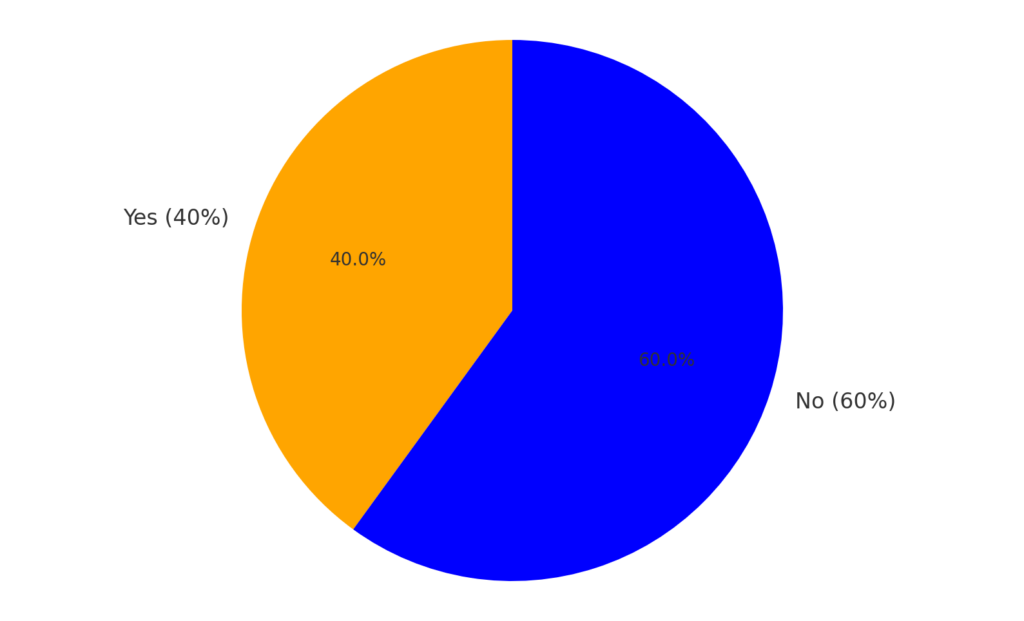
Among Slovenian visitors, 80% of respondents are familiar with the Slovenia Green brand, while among foreign visitors, this percentage is significantly lower, at just 10%.
Level of satisfaction with the offer and the characteristics of the destination:
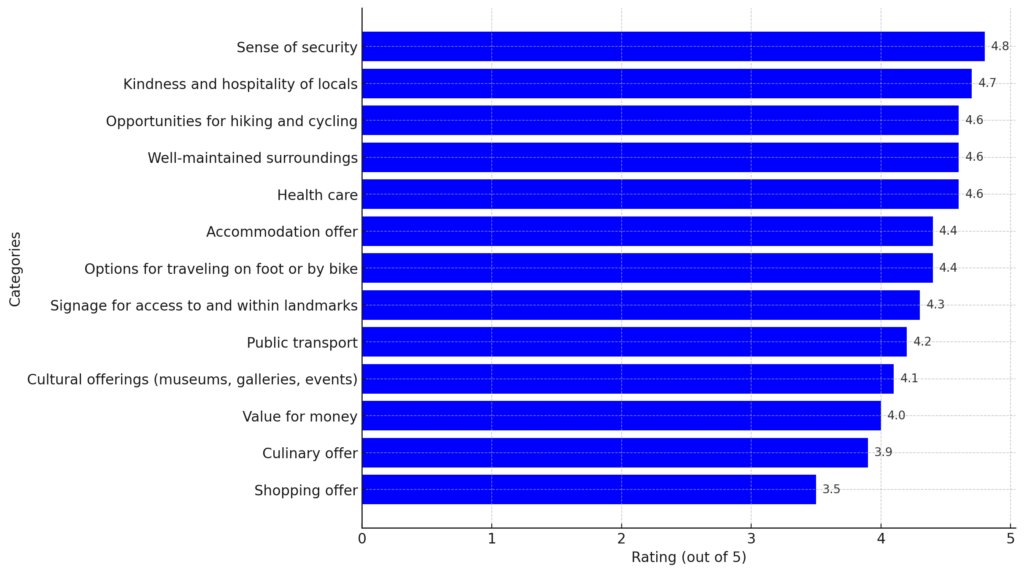
The survey presents evaluations of various aspects of Bohinj’s offerings and characteristics, rated on a scale from 1 to 5. The highest ratings were given to the sense of safety (4.8), the friendliness and hospitality of locals (4.7), and opportunities for hiking and cycling (4.6). The well-maintained environment and focus on health also received a rating of 4.6. Accommodation offerings and options for walking or cycling scored 4.4, while the signage to attractions was rated at 4.3. Public transportation received a rating of 4.2. Cultural content, such as museums, galleries, and events, was rated at 4.1, value for money at 4.0, and dining options at 3.9. Shopping opportunities received the lowest rating of 3.5. The results provide a comprehensive insight into various aspects of the destination, with natural features, environmental maintenance, and hospitality standing out.
Can you tell us more about what you were not satisfied with?
Visitors to Bohinj provided various feedback on their experience, highlighting certain areas that could be improved to enhance the overall destination experience.
- “Buses were delayed, not enough buses to the Savica Waterfall, parking is not included in the Julian Alps Card.”
- “We’re in a tourist area, but the Mercator store is only open until 1 PM on Saturdays!!! Too few playgrounds for children.”
- “Crowds.”
- “Better access to the cycling trail is needed, and there are too few signs showing where to enter the trail.”
- “Crowds, insufficient infrastructure.”
- “Dining options.”
- “Public transportation is completely dysfunctional – buses are always late. At the TIC by the lake, the staff was rude, uninterested, and didn’t provide accurate information. Every question was answered with advice to look it up online. The TIC in Bohinjska Bistrica is much better and friendlier. The area cannot handle a large number of visitors – it’s much better to visit other parts of Slovenia where there are fewer tourists and where we feel more welcome.”
- “Public buses are always late, and free transportation is only available on weekends?!”
- “We wanted to reach the Savica Waterfall, but there is no bus service to the area in autumn.”
- “In September, there isn’t much going on, only natural attractions.”
- “I’m heading to Lake Bohinj tomorrow, and I’m not sure if I’ll find a spot at a campsite because all the campsites are full. It seems that prices have risen significantly due to the tourism boom in Slovenia.”
- “High accommodation prices in summer, poor quality in most dining establishments compared to the price, and limited dining options outside the summer season.”
- “Facilities for motorhomes – definitely not enough parking spaces.”
- “Expensive parking fees.”
The collected comments from visitors shed light on various aspects of their experience in Bohinj, with some highlighting specific challenges such as transportation accessibility, infrastructure, and dining options. Some of the issues raised, such as insufficient signage or delays in public transportation, are tangible challenges that the destination can address through improvements. At the same time, part of the dissatisfaction stems from a lack of information or unmet expectations, indicating a need for more effective visitor communication, whether through TICs, online platforms, or other channels.
Recognition of the destination’s sustainability efforts:
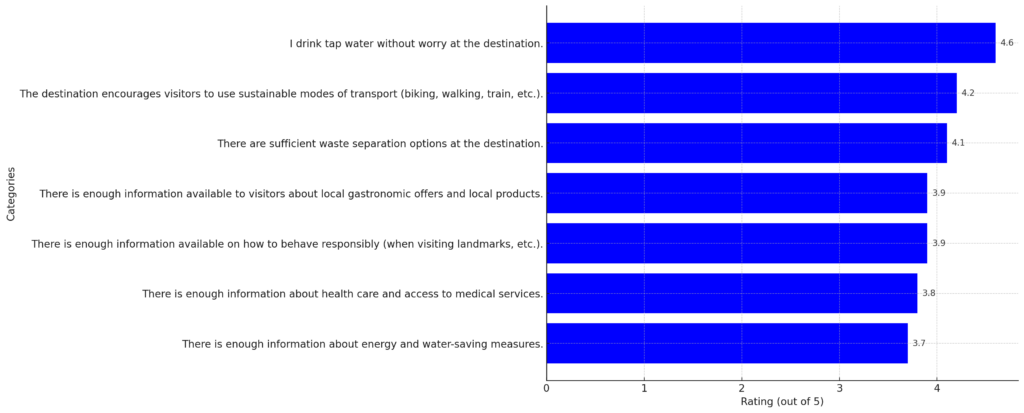
The highest rating, 4.6, was given to the ability to drink tap water without concern, reflecting visitors’ strong confidence in the quality of drinking water at the destination. The destination received a rating of 4.2 for promoting sustainable modes of transport, such as cycling, walking, and public transportation, indicating that visitors recognize the destination’s efforts in this area. A rating of 4.1 for the availability of waste separation points suggests a satisfactory but improvable area regarding waste management. Information about local gastronomy and shopping options, as well as guidelines for responsible behavior when visiting attractions, both received a rating of 3.9, pointing to room for greater accessibility of information in these areas. Similarly, information about health care and access to medical services was rated 3.8, while information on energy and water conservation received a 3.7. These slightly lower ratings suggest a need to strengthen communication and awareness about these aspects of sustainability. The results indicate that visitors strongly recognize certain sustainability efforts by the destination, such as water quality and the promotion of sustainable transport, while information about responsible behavior, health, and conservation is less acknowledged and could benefit from additional promotion.
What else do you think the destination could do to make its tourism offer greener?
Visitors to Bohinj shared their ideas and suggestions for improving the green tourism offer in the destination in a survey.
- “Cycling tours.”
“A call to conserve water and energy (at every provider – more prominently displayed).” - “Better-organized parking and shuttle services to trailheads (with dogs).”
- “Guided tours, more cycling tours.”
- “Water fountains in the valley.”
- “Bohinj is already perfect.”
- “Allow dogs on buses.”
- “More information in English.”
- “Perhaps more dining options, including for vegetarians.”
- “Weak Wi-Fi signal.”
- “Nothing, everything is great.”
- “More unlimited parking spaces, better bus connections, everything else is fine.”
- “More bus services.”
- “Limiting the number of visitors.”
- “Too few shops.”
- “More awareness about drinking water and reducing plastic consumption.”
- “More enforcement of existing rules, especially for swimmers and paddlers during the summer.”
- “Less reliance on canned goods, more local offerings in restaurants, shops, and market stalls.”
- “I have no suggestions because everything is already perfect.”
- “Everything is wonderful.”
- “Too few events for young people.”
- “Not enough activities for rainy days.”
- “More promotion of natural attractions accessible on foot.”
Visitors to Bohinj offered numerous suggestions for improving the green tourism offerings, highlighting specific ideas such as organizing cycling tours and guided excursions, adding more water fountains in the valley, and enhancing infrastructure for parking and public transport. They also emphasized the need for greater awareness of water and energy conservation and reducing plastic use. Some visitors proposed limiting the number of visitors and increasing enforcement of rules, particularly during the summer months regarding the use of the lake and popular areas.
Additionally, they expressed a desire for more local offerings in restaurants, shops, and market stalls, as well as better dining options for vegetarians. An important aspect highlighted was encouraging visitors to use sustainable modes of transport and providing more information about natural attractions accessible on foot.
Visitors positively noted some existing sustainable aspects of the destination, such as the quality of drinking water and the overall organization of the area, with some explicitly stating that Bohinj is already perfect and “nothing needs to be changed.”
Information on respondents:
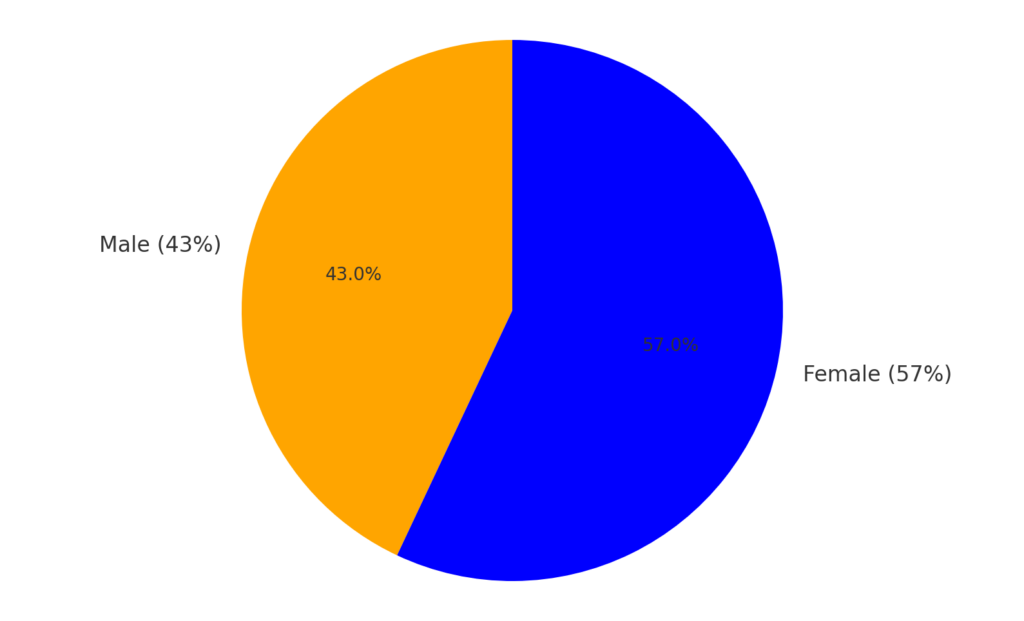
Gender:
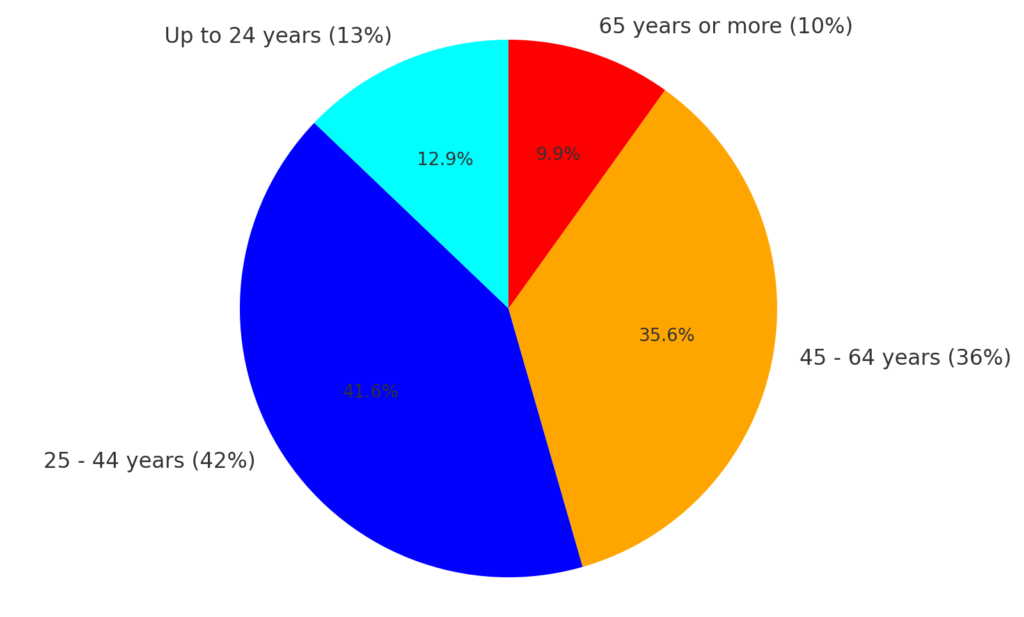
Age:
Occupational status: